Building an Effective Ministry Response

Every church is unique, but effective ministry requires intentional planning and development. Ministry development helps churches assess their current practices, identify areas for growth, and build sustainable approaches that strengthen care, improve response efforts, and support the long-term health of the congregation.

Assessing Church Needs
Every church has unique strengths, challenges, and opportunities for growth. Taking time to evaluate current ministry practices, available resources, leadership capacity, and congregational needs can help leaders gain a clearer understanding of where they are today and where they hope to go in the future. A thoughtful assessment often reveals opportunities that might otherwise be overlooked and provides valuable insight for informed planning and strategic ministry development.

Building a Ministry Team
Sustainable ministry is rarely built through the efforts of a single leader. Developing a team of committed individuals with diverse gifts, perspectives, and experiences helps strengthen collaboration, improve communication, and support long-term ministry goals. As ministries grow and responsibilities expand, a well-equipped team can provide valuable insight, shared leadership, and the capacity needed to effectively meet the evolving needs of the congregation.

Developing Policies and Procedures
Effective ministry often depends on more than good intentions. Clear policies and procedures provide a framework for consistency, accountability, and informed decision-making while helping leaders navigate complex situations with greater confidence. As churches grow and ministry needs evolve, developing well-defined processes can help ensure that leaders, staff, and volunteers are prepared to respond thoughtfully, communicate effectively, and serve their congregation with greater clarity and purpose.

Strengthening Community Partnerships
No single church can meet every need within its congregation alone. Developing relationships with trusted community organizations and service providers helps churches broaden their support network, strengthen available resources, and improve access to specialized care when needed. Thoughtful partnerships not only enhance ministry effectiveness but also help create a more comprehensive and sustainable approach to serving individuals, families, and the broader community.
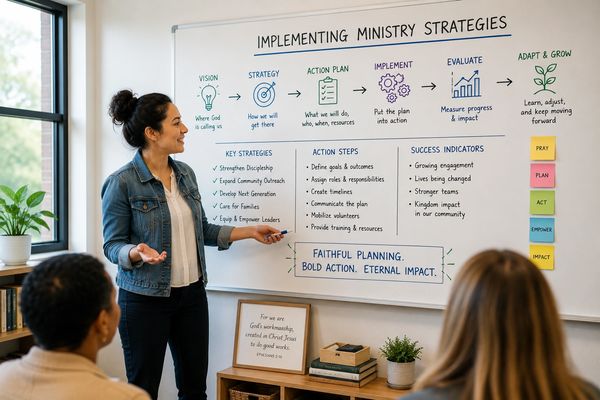
Implementing Ministry Strategies
Developing a vision is only the first step; meaningful ministry growth occurs when plans are translated into action. Implementing ministry strategies requires clear goals, thoughtful coordination, leadership commitment, and ongoing evaluation to ensure efforts remain effective and sustainable. Churches that take an intentional approach to implementation are often better positioned to adapt to changing needs, strengthen ministry impact, and achieve long-term objectives.

Sustaining Long-Term Growth
Building a ministry is one achievement; sustaining it is another. Long-term effectiveness often depends on consistent leadership development, regular evaluation, strategic planning, and the ability to adapt as ministry needs evolve. Churches that intentionally invest in growth and sustainability create stronger foundations that can support future generations and expand their ministry impact over time.