Referral Pathways

Connecting Survivors with Trusted Resources, Professional Support, and Practical Help
No single church can meet every need a survivor may face. Effective support often requires collaboration between church leaders, domestic violence advocates, counselors, legal professionals, medical providers, and community organizations. Referral pathways help churches move beyond good intentions by connecting survivors with qualified resources that promote safety, healing, and long-term support. By developing trusted partnerships and understanding available services, churches can respond with confidence and ensure that individuals receive the help they need at the right time.
Types of Resources to Consider
Intimate Partner/Domestic Violence Advocacy Organizations
Intimate Partner/Domestic Violence Advocacy Organizations
Intimate Partner/Domestic Violence Advocacy Organizations

Connect survivors with specialized advocates who provide safety planning, crisis intervention, and ongoing support.
Counseling and Mental Health Resources
Intimate Partner/Domestic Violence Advocacy Organizations
Intimate Partner/Domestic Violence Advocacy Organizations
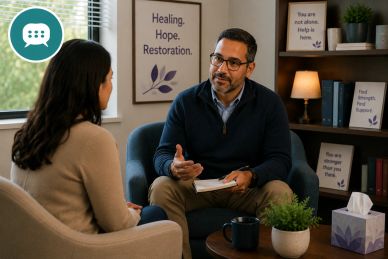
Help survivors access trauma-informed counseling and mental health services that promote healing and recovery.
Housing and Emergency Assistance
Intimate Partner/Domestic Violence Advocacy Organizations
Assist survivors in finding safe housing, emergency shelter, and resources that promote stability and security.
Legal Resources

Provide access to legal professionals who can assist with protection orders, custody matters, and victim rights.
Medical and Healthcare Support
Medical and Healthcare Support
Connect survivors with healthcare providers who can address injuries, document abuse, and support overall well-being.
Hotline and Crisis Support
Medical and Healthcare Support
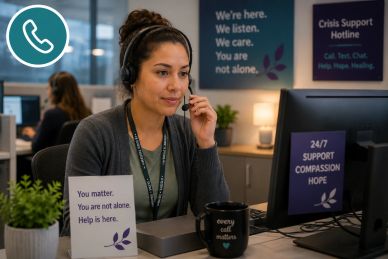
Provide immediate, confidential access to trained professionals who can offer guidance, support, and crisis intervention.
Community and Support Services
Law Enforcement and Emergency Services

Link survivors to community resources that provide practical assistance, encouragement, and ongoing support.
Law Enforcement and Emergency Services
Law Enforcement and Emergency Services

Ensure immediate access to emergency intervention when there is a threat to safety or criminal activity.
Faith-Based Support and Spiritual Care
Faith-Based Support and Spiritual Care

Offer spiritual encouragement and faith-centered support that complements professional services and promotes healing.
Building Your Referral Network

Developing Trusted Partnerships Before A Crisis Occurs
Churches are often the first place survivors turn for help, but effective support requires more than good intentions. A strong referral network allows pastors and church leaders to quickly connect survivors with qualified professionals and organizations that can address legal, medical, housing, counseling, and safety needs. Building these relationships before a crisis occurs helps churches respond with confidence, competence, and compassion.

Relationships Matter
Meet regularly with local partners, understand their services, and keep contact information updated.
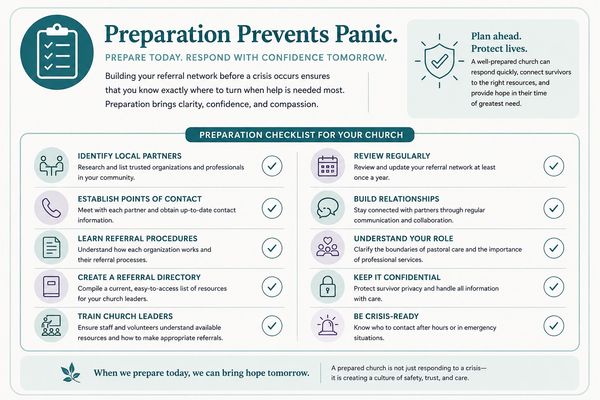
Preparation Prevents Panic
Build your referral network before a crisis occurs so leaders know exactly where to turn when help is needed.
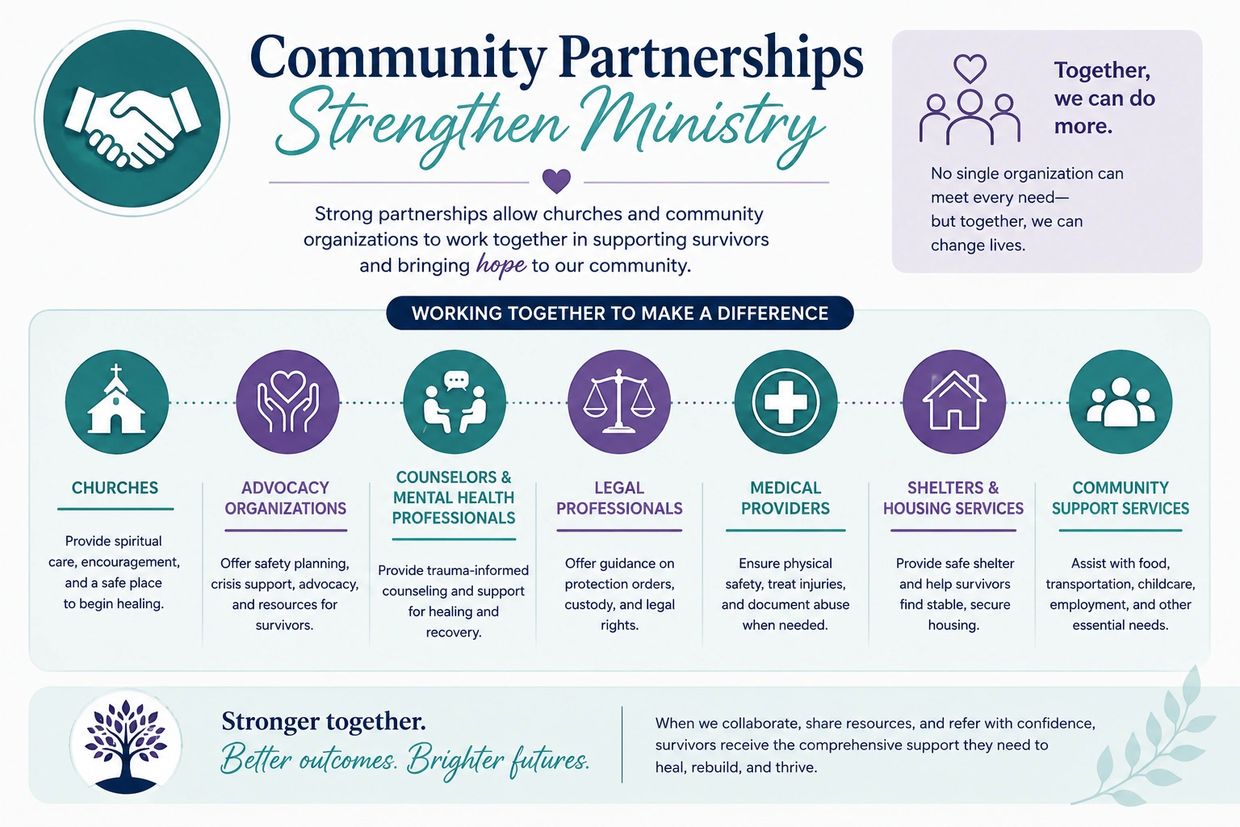
Community Partnerships Strengthen Ministry
Strong partnerships allow churches and community organizations to work together in supporting survivors.
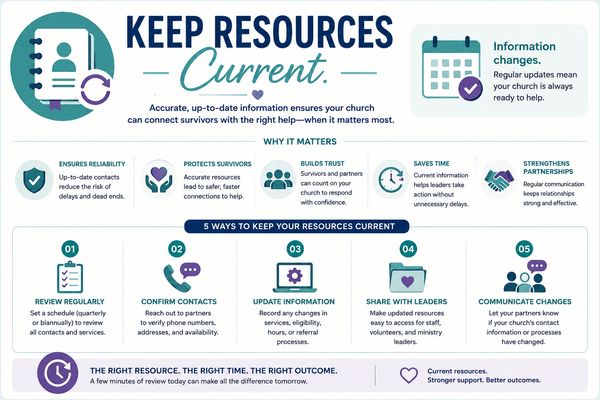
Keep Resources Current
Review referral contacts regularly to ensure information remains accurate and accessible.
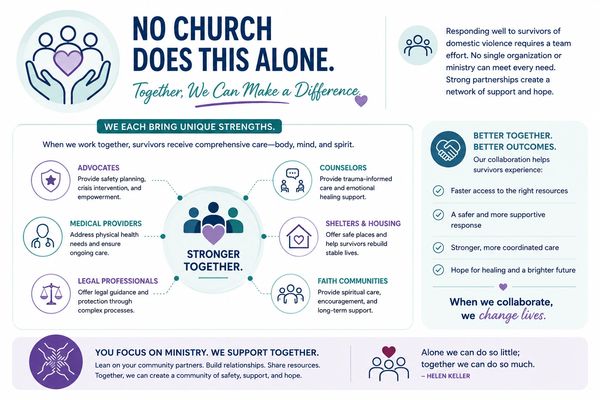
No Church Does This Alone
Effective responses rely on collaboration between churches, advocates, counselors, medical providers, and legal professionals.